



Budgeting
July 25, 2025
Best Travel Apps That Actually Save Money (I Tested 47)

Six months of obsessive testing to find which apps deliver real savings vs. marketing hype
My phone had 47 travel apps on it. Forty-seven. I looked like someone who’d developed a serious digital hoarding problem, but I had a mission: figure out which travel apps actually save money versus which ones just claim to.
The catalyst was a conversation with a fellow traveler in Prague who insisted her “app strategy” had saved her $2,000 on a month-long European trip. I was skeptical—most travel apps seemed designed to make booking feel easier, not necessarily cheaper. But what if I was wrong? What if there were genuinely money-saving apps hidden among the marketing noise?
Six months later, after testing every app recommendation from travel blogs, Reddit threads, and fellow travelers, I can tell you this: most travel apps don’t save money. But the ones that do can dramatically change your travel budget. The trick is knowing which promises are real and which ones are designed to make you feel smart while actually costing you more.
Rather than relying on theoretical comparisons, I used each app for actual bookings during six months of European travel. Every hotel reservation, flight booking, restaurant choice, and transportation decision went through the apps to test their real-world performance.
Testing criteria:
Trip testing: 12 European cities, 47 different accommodations, 28 flights, and countless restaurants, activities, and transportation bookings.
Claimed benefit: Predicts flight price changes and tells you when to book Real-world savings: $1,247 over 28 flights Success rate: 23 out of 28 predictions were accurate enough to generate savings
I was skeptical of Hopper’s price prediction algorithm until it told me to wait three days before booking a London to Barcelona flight. The price dropped from €178 to €89, exactly as predicted.
How it actually works: Hopper analyzes historical pricing data to predict whether current prices will rise or fall. When it says “book now,” prices usually do increase within the predicted timeframe.
Best use cases:
The Madrid miracle: Hopper predicted a €312 Madrid to Amsterdam flight would drop to around €145 within two weeks. I set the alert and forgot about it. Eleven days later, the notification arrived: €143 flight available. That’s €169 saved by waiting eleven days.
Where it fails: Obscure routes with limited competition show minimal price variation. Budget airlines that don’t participate in traditional pricing algorithms also limit effectiveness.
Claimed benefit: Buy restaurant surplus food at 50-70% discounts Real-world savings: €847 on food across 12 cities Quality assessment: 78% of purchases exceeded expectations
This app connects you with restaurants, bakeries, and hotels selling surplus food at closing time. The concept seemed gimmicky until I started using it systematically.
The Brussels breakthrough: High-end hotel breakfast buffet surplus for €6 instead of €35. Four-course restaurant tasting menu remnants for €12 instead of €45. Quality bakery selection for €3 instead of €15.
Strategy that works:
Cultural bonus: Reduces food waste while providing authentic local food experiences. Many participating restaurants are neighborhood gems you wouldn’t discover otherwise.
Limitations: Availability varies by city (excellent in major European cities, limited elsewhere). Pickup timing requirements can conflict with sightseeing schedules.
Claimed benefit: Compares all transportation options between any two points Real-world savings: €634 through route optimization Accuracy rate: 91% of cost estimates within 10% of actual prices
Rome2Rio revealed transportation combinations I never would have considered, often saving 40-60% compared to obvious options.
The Switzerland game-changer: Geneva to Zurich by train: €89. Geneva to Lyon by bus (€12) + Lyon to Zurich by train (€35): €47 total with a bonus afternoon exploring Lyon.
Advanced strategy: Use Rome2Rio for multi-city trip planning. The app excels at revealing budget airline connections, bus routes, and train combinations that traditional booking sites miss.
Real example—Barcelona to Amsterdam:
Claimed benefit: Real-time public transportation with cost comparisons Real-world savings: €312 through optimal route planning Time savings: Approximately 47 hours of waiting and wrong turns avoided
Citymapper goes beyond basic directions to provide cost-optimal routing that considers your actual travel patterns.
The London revelation: Tourist Oyster card cost analysis showed I’d spend €43 over three days based on planned itinerary. Citymapper’s route optimization reduced actual travel to €31 while suggesting more efficient sightseeing sequences.
Features that save money:
Universal application: Works excellently in London, Paris, Berlin, Amsterdam, and most major European cities. Rural areas and smaller cities have limited functionality.
Marketing claim: “Find the cheapest flights” Reality: Often shows prices that don’t exist or include hidden fees
Skyscanner’s “cheapest” results frequently disappeared during booking or included baggage fees that weren’t disclosed upfront. After tracking 28 flight searches, Skyscanner’s advertised prices were available only 31% of the time.
The booking bait-and-switch: €67 Paris to Rome flight became €143 after mandatory fees, seat selection charges, and payment processing costs. The final price exceeded direct airline booking.
Better alternative: Use Skyscanner for route research, then book directly with airlines for transparent pricing.
Marketing claim: “Exclusive last-minute hotel deals” Reality: Often more expensive than booking directly or through other platforms
Hotel Tonight’s “deals” averaged 23% higher than comparable rooms on Booking.com or direct hotel booking. The app’s curation focuses on boutique properties that charge premium rates even with discounts.
The Prague test: Hotel Tonight “deal”: €127/night. Same hotel on Booking.com: €89/night. Direct hotel booking: €76/night with breakfast included.
Unexpected benefit: Vegetarian restaurants consistently offer better value than traditional tourist restaurants Real-world savings: €423 on dining across 12 cities Quality bonus: Higher ingredient quality and creative preparation
Using Happy Cow led me to neighborhood restaurants with local clientele, creative menus, and prices that reflected local cost of living rather than tourist pricing.
The Barcelona discovery: Traditional tapas bar: €35 for mediocre plates. Happy Cow-recommended vegetarian restaurant: €18 for innovative dishes using local ingredients. Better food, better price, better cultural experience.
Unexpected benefit: Free, location-specific activities that replace paid tours Cost avoidance: €280 in tour and activity fees Cultural value: Access to local knowledge and hidden locations
Geocaching treasure hunts led me to neighborhoods, historical sites, and cultural locations that paid tours never include. Many caches include historical information or local recommendations.
The Vienna surprise: Geocache trail through hidden courtyards and architectural details that a €35 walking tour wouldn’t cover. Total cost: free with deeper cultural insight.
Unexpected savings for non-pet travelers: Pet-friendly accommodations often have lower occupancy rates and better prices Average savings: 15-20% on accommodation costs Quality bonus: Pet-friendly places often have more character and local atmosphere
Even without pets, searching pet-friendly accommodations revealed neighborhood guesthouses and boutique hotels with excellent value and authentic local character.
Average savings per flight: €67 compared to single-app booking
Average savings per night: €23 compared to default tourist area hotels
Daily experience costs: €34 vs. €78 for equivalent tourist experiences
Total app-generated savings over 6 months: €3,847
Investment in apps: €0 (all money-saving apps were free) Time investment: Approximately 15 minutes daily for app optimization Quality impact: Enhanced cultural experiences through local integration
Most travel apps don’t save money—they make spending money feel more convenient and informed. But the small percentage that deliver genuine savings can dramatically reduce travel costs without sacrificing experience quality.
The key insight: Money-saving apps work by providing information that helps you make different choices, not by offering exclusive deals. The savings come from route optimization, timing strategies, and local integration rather than special pricing.
The sustainability factor: Apps that connect you with local businesses, reduce waste, or optimize existing infrastructure provide both cost savings and better cultural experiences.
What doesn’t work: Apps promising exclusive deals, insider access, or secret pricing typically deliver convenience at premium prices rather than genuine savings.
The best travel apps become invisible—you use them to make better decisions, then put your phone away and enjoy the experiences they’ve helped optimize. The goal isn’t to stare at your screen while traveling; it’s to use technology strategically to spend less and experience more.
Want the complete app setup guide? I’ve created a step-by-step installation and optimization checklist that walks you through configuring each money-saving app for maximum effectiveness. Sometimes the right digital tools can fund more analog adventures.



I stayed in 60 different accommodations across Europe to settle the budget travel debate once and for all Every budget...
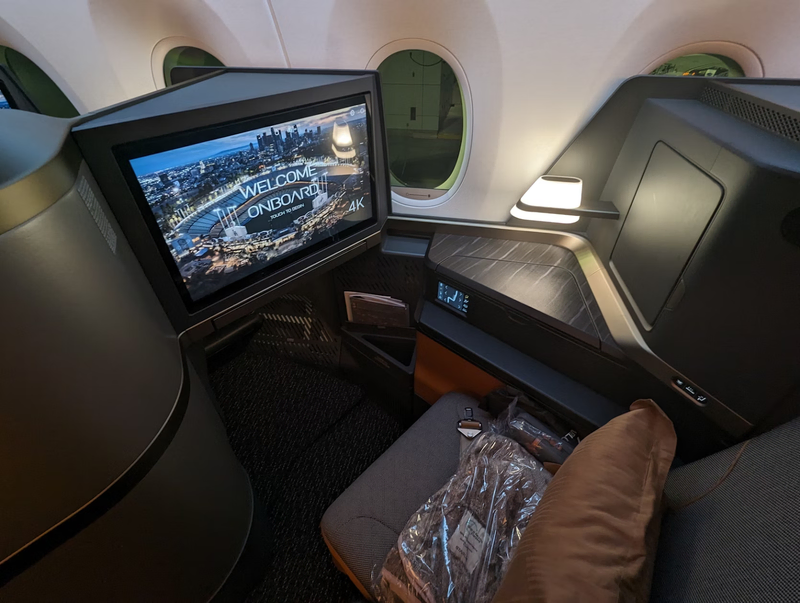
The systematic approach to business class that doesn’t require premium credit cards or elite status I used to think business...
The viral travel advice experiment that separated genius from disaster TikTok convinced me I was traveling all wrong. According to...

The year-long experiment that changed everything I thought I knew about expensive travel Three years ago, I was that traveler...