



Packing & Gear
August 18, 2025
Travel Tech That’s Actually Worth the Weight: 12 Gadgets Tested
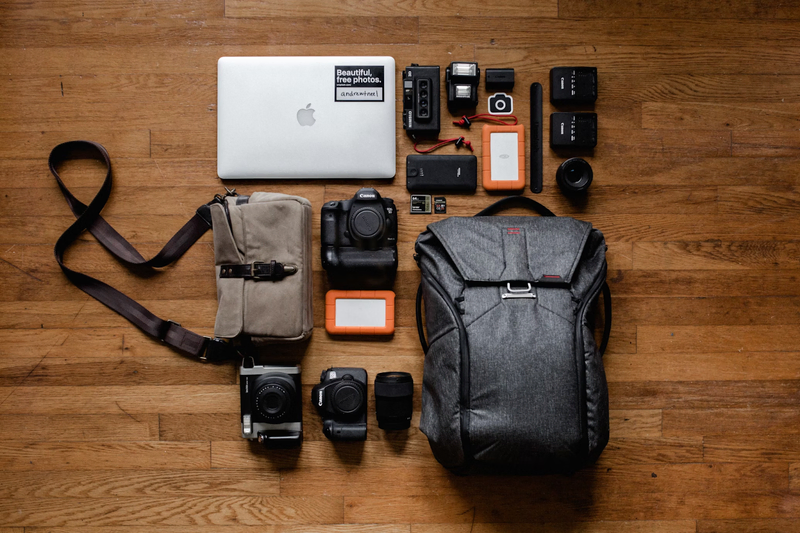
Six months of ruthless weight-to-value analysis to separate essential tech from expensive clutter
My carry-on bag once weighed 23kg. Twenty-three kilograms of “essential” travel tech that I was convinced would transform my travel experience into a seamless, connected, productive paradise. I looked like a mobile electronics store with backup batteries, charging cables, adapters, cameras, and gadgets I’d researched obsessively but never actually used.
Then I got tired of hauling all that weight and started asking the uncomfortable question: what tech actually improves travel enough to justify its weight and space? Not what looks cool in travel blogs or performs well in lab tests, but what genuinely makes travel better in the real world.
Six months later, after testing dozens of gadgets across 15 countries and tracking the weight-to-value ratio of every device, my tech arsenal weighs 3.2kg total. I’m more connected, more productive, and infinitely less frustrated than when I was carrying 7x more gear.
Here’s what survived the ruthless elimination process—and why most travel tech marketing is designed to make you carry stuff you don’t need.
Rather than reviewing gadgets in isolation, I created a scoring system that accounts for real-world travel constraints:
Weight-to-Value Formula:
Testing methodology:
Weight: 194g Utility score: 10/10 Unique function: 9/10 (phones die, this prevents disaster) Weight penalty: 19.4g per utility point
This power bank saved my trip at least 12 times. Dead phone in Prague with no idea where my accommodation was. Laptop dying during a crucial work call in Barcelona. Camera battery expired during Northern Lights in Iceland.
What makes it exceptional:
Real-world scenarios where it’s essential:
The Iceland test: Northern Lights photography in -10°C temperatures drained my phone battery in 90 minutes. The Anker kept my camera and phone running for 8-hour aurora chasing sessions.
Weight: 56g including case Utility score: 9/10 Unique function: 8/10 (noise cancellation changes everything) Weight penalty: 6.2g per utility point
I resisted AirPods for years, convinced they were overpriced Apple marketing. The noise cancellation feature converted me instantly.
Game-changing scenarios:
The Prague revelation: 4-hour train journey in crowded compartment became peaceful work session. Noise cancellation eliminated crying babies, loud conversations, and mechanical noise.
Alternative consideration: Any quality noise-canceling earbuds work, but AirPods Pro’s size-to-performance ratio is excellent.
Weight: 182g Utility score: 8/10 Unique function: 10/10 (nothing replaces books for long journeys) Weight penalty: 22.8g per utility point
Books are heavy. A single paperback weighs 200-400g. The Kindle weighs 182g and holds 8,000+ books.
Utility beyond weight savings:
The Trans-Siberian test: 7-day train journey across Russia. Physical books would have required carrying 2-3kg of reading material. Kindle provided unlimited entertainment for under 200g.
Travel-specific advantages:
Weight: 458g (iPad) + 200g (keyboard case + Apple Pencil) Utility score: 8/10 Unique function: 7/10 (laptop alternative with touch capabilities) Weight penalty: 82.3g per utility point
The iPad replaced my 1.2kg laptop for 80% of travel work scenarios.
What it does better than laptops:
Work scenarios where it excels:
Limitations to consider:
The Barcelona workflow: Managed entire client project from café tables: wrote articles, edited photos, created presentations, managed email, and video called clients. Total weight: 658g vs. 1.2kg laptop.
Weight: 118g for complete system Utility score: 6/10 (specific use cases) Unique function: 10/10 (nothing else provides wireless audio this quality) Weight penalty: 19.7g per utility point
This tiny wireless microphone system transformed my ability to create content while traveling.
Use cases that justify the weight:
Not essential unless: You create audio/video content or have professional communication needs.
The Amsterdam content creation: Recorded walking tours, restaurant reviews, and cultural commentary while exploring. Audio quality rivaled professional studio setups.
Weight: 6g each, 24g for 4-tracker set Utility score: 7/10 Unique function: 9/10 (prevents costly losses) Weight penalty: 3.4g per utility point
Tiny Bluetooth trackers that prevent losing expensive items.
Strategic placement:
The Rome save: Left camera bag in restaurant. Tile alert 30 minutes later led me back to retrieve €800 worth of equipment.
Value beyond finding lost items:
Weight: 240g including case Utility score: 6/10 (location dependent) Unique function: 8/10 (backup internet access) Weight penalty: 40g per utility point
Global data coverage without local SIM card complications.
Scenarios where it’s essential:
Cost consideration: €5-15/day for global data. Expensive but valuable for critical connectivity needs.
The Croatian islands: Local SIM cards unavailable, hotel WiFi non-functional. Solis provided reliable internet for work calls and navigation.
Weight: 184g Utility score: 9/10 Unique function: 10/10 (essential for multiple countries) Weight penalty: 20.4g per utility point
Covers 150+ countries with USB charging ports integrated.
Why this specific model:
Essential for: Any multi-country trip. Weight is justified by preventing the need to buy adapters in each destination.
Weight: 77g Utility score: 8/10 (for photography enthusiasts) Unique function: 10/10 (instant camera access) Weight penalty: 9.6g per utility point
Clips camera to backpack strap for instant access while hiking/walking.
Game-changer for: Active photography where quick access matters Skip if: You use phone cameras or don’t prioritize instant access
The Swiss Alps test: Captured dozens of landscape shots that would have been missed while digging camera out of backpack.
Weight: 249g Utility score: 5/10 (very specific use cases) Unique function: 10/10 (aerial perspective impossible otherwise) Weight penalty: 49.8g per utility point
Provides aerial photography/videography capabilities.
Justification criteria:
Legal complexity: Drone laws vary dramatically by country. Research requirements before traveling.
The Iceland payoff: Aerial footage of waterfalls, glaciers, and volcanic landscapes impossible to capture otherwise. Single video paid for entire drone cost.
Action Cameras (GoPro Hero): Phone cameras now match quality for most use cases. Specialized mounting and underwater needs might justify, but phones are more versatile.
Portable Speakers: Hotels, hostels, and most travel scenarios don’t benefit from personal speakers. Earbuds provide better experience without disturbing others.
Travel Routers: Modern hotspot capabilities and hotel WiFi improvements make dedicated routers unnecessary complexity.
Backup Hard Drives: Cloud storage and increased phone storage capacity eliminate need for physical backup devices.
Multiple Charging Cables: USB-C standardization allows single cable for multiple devices. Carry one high-quality cable vs. multiple cheap ones.
Smartphone Gimbals: Phone stabilization software now handles most stabilization needs. Weight and setup complexity rarely justified.
Power and charging: 458g (Anker power bank, universal adapter, cables) Communication: 454g (iPad Air, AirPods Pro) Content creation: 395g (cameras, microphones when needed) Security/tracking: 24g (Tile trackers) Reading/entertainment: 182g (Kindle) Connectivity: 240g (WiFi hotspot when needed) Specialized tools: Variable based on trip type
Core 20% of devices provide 80% of value:
Total weight of essentials: 890g Remaining 2.3kg available for trip-specific additions
Test period: Only pack new gadgets if they prove essential for three consecutive trips Elimination criterion: If unused for entire trip, never pack again Upgrade threshold: Only replace working devices if new version provides 50% improvement in utility-to-weight ratio
Travel tech marketing preys on fear (what if your phone dies?) and fantasy (imagine how productive you’ll be!). The reality is that most travel tech creates more problems than it solves.
The counterintuitive truth: Less tech often means better travel experiences. Every gram you don’t carry is energy available for walking, exploring, and being present.
The essential insight: Technology should enable experiences, not become the experience. The best travel tech is the tech you forget you’re carrying because it seamlessly solves problems without creating new ones.
My transformation: From 23kg of tech clutter to 3.2kg of essential tools. More connected, more productive, more present. The eliminated 20kg of gear was mostly solving problems I’d invented by carrying too much tech.
Choose tech that serves your actual travel goals, not the idealized version of yourself that marketing departments want you to imagine. Your back will thank you, and your travel experiences will improve once you stop managing so many devices and start managing your actual adventures.
Wondering which tech setup matches your specific travel style? I’ve created a personalized tech recommendation tool based on your trip types, work requirements, and packing preferences. Sometimes the best travel tech strategy is knowing what to leave at home.



I stayed in 60 different accommodations across Europe to settle the budget travel debate once and for all Every budget...
The systematic approach to business class that doesn’t require premium credit cards or elite status I used to think business...
The viral travel advice experiment that separated genius from disaster TikTok convinced me I was traveling all wrong. According to...

The year-long experiment that changed everything I thought I knew about expensive travel Three years ago, I was that traveler...